Who wants a Book DJ for large event needs more than a good playlist. Once many people come together, not only do expectations for mood and sound increase, but so do the demands on timing, technique, communication, and composure. This is exactly where solid routine separates itself from genuine event expertise.
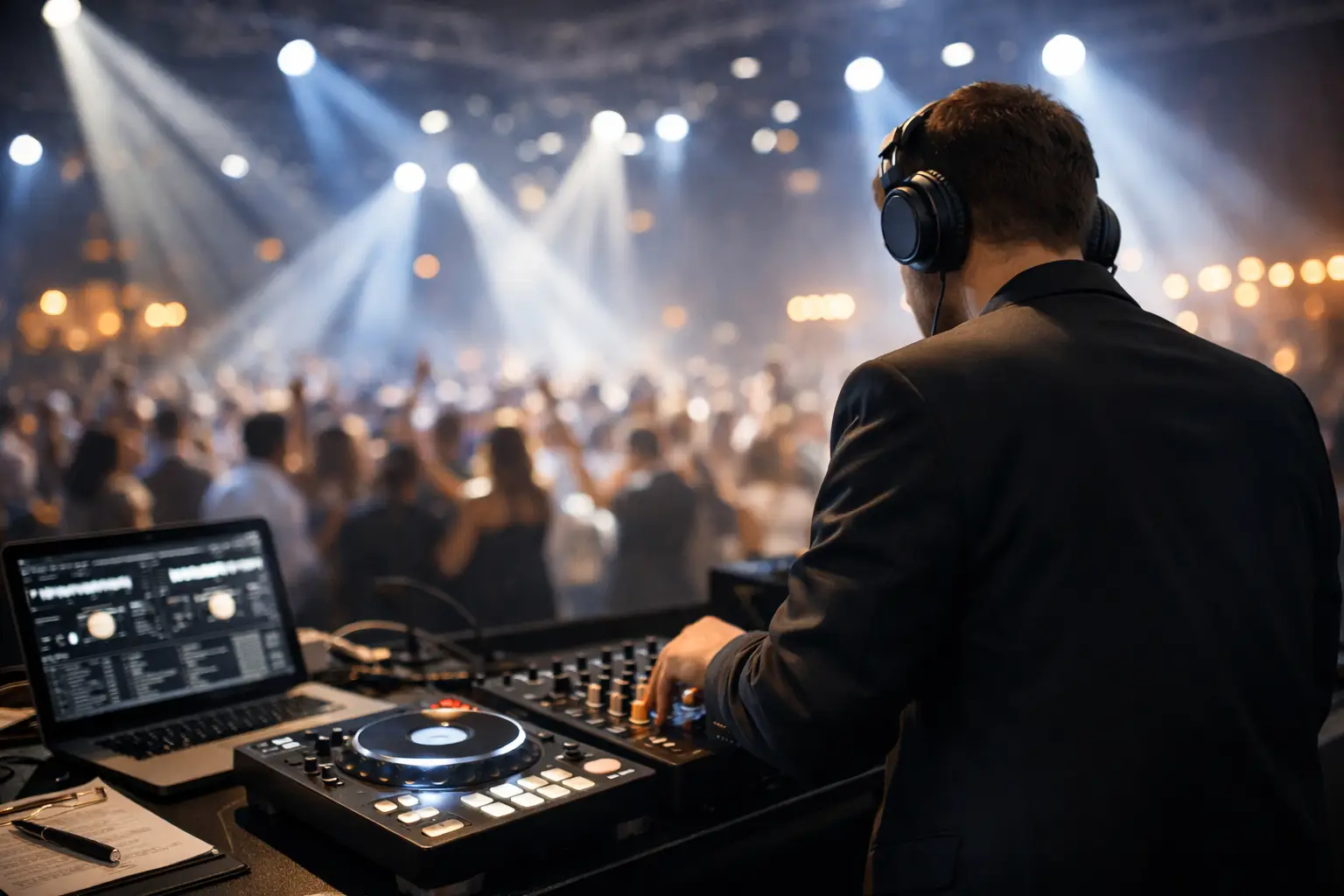
A large event forgives little. If the transitions are bumpy, announcements get lost, or the music misses the audience, the entire room notices immediately. Conversely, an experienced DJ can make precisely the difference that guests will later remember as atmosphere, energy, and goosebumps.
What distinguishes a large-scale event from a normal celebration
At a wedding or birthday party, many things can be handled spontaneously. This is only possible to a limited extent at a large event. Here, program, technology, venue, schedule, and audience management interlock. The DJ isn't just there for music, but is often a central building block in the entire event flow.
In addition, there is the heterogeneity of the audience. At large events, different age groups, expectations, and musical tastes usually come together. Corporate events, town festivals, galas, club celebrations, or larger anniversaries rarely have a uniform audience. A good DJ must be able to read this dynamic – not theoretically, but live, in real-time, and under pressure.
The energy in the room also works differently. A dance floor with 40 guests reacts faster than a hall with several hundred people. Those who want to achieve an effect here need experience in building tension, placing music strategically, and maintaining a consistent mood over longer periods.
Booking a DJ for a large event – what really matters
Many organizers look at the price first. That's understandable, but for large events, it's not the deciding factor. Much more important is the question of whether the DJ can bear the responsibility that comes with such a setting.
Experience is not a decorative extra in this context. It's demonstrated by how reliably someone handles unexpected situations. If a program item is delayed, a speaker needs to be integrated spontaneously, or the mood sours during a particular phase, you need someone who stays calm and reacts appropriately on the spot. A DJ who just plays songs isn't enough for that.
Equally important is musical diversity. At a large event, only one genre rarely works. What's needed is a sense for when mainstream resonates, when classics draw, when current hits build momentum, and when restraint has a greater impact. Good music selection is no accident. It arises from understanding people, experience, and genuine observation of the space.
Technical reliability also plays a major role. Depending on the venue, number of guests, and schedule, additional sound and lighting equipment may be necessary. Not every DJ brings the same equipment. Therefore, it should be clarified early on whether existing equipment will be used, whether their own equipment will be brought in, and how coordination with other service providers will proceed.
The most common booking mistakes
A typical mistake is scheduling the DJ too late. Especially for larger events, the musical direction is closely linked to the overall schedule. If the DJ is only involved shortly before the date, there is often a lack of proper coordination with the technical aspects, the moderation, or the program items.
Equally problematic is the assumption that every event functions identically in terms of music. What works in a club may not be suitable for a corporate party with a mixed audience. What seems spontaneously charming at a private party can appear unprofessional at a gala. Large events require a delicate touch rather than a standard solution.
The topic of communication is also often underestimated. An organizer shouldn't feel like they're facing an open-ended outcome. Clear agreements on playing times, contact persons, setup, dress code, music requests, and no-gos provide security. Those who answer evasively or remain imprecise are usually not the best choice for larger formats.
This is how the selection process works effectively in practice.
If you have a Book DJ for large event Ideally, don't start by asking about the song list but by clarifying the character of your event. What should the evening evoke? Should people dance, should the DJ provide more of an elegant accompaniment, or is a combination of both needed in different phases? The clearer this objective is, the better you can assess whether a DJ is a good fit, both professionally and personally.
In the next step, a personal conversation is worthwhile. It quickly shows whether someone is just listing services or truly understands what's important for your event. An experienced DJ will inquire about the audience, venue, timeline, technical requirements, and potential pitfalls. They will think along rather than just managing dates.
References also help, but not just in terms of names or logos. What's more interesting is whether the described events fit your situation. Those who have already accompanied large celebrations, company events, or high-attendance events usually bring a sense of calm that can be felt on-site.
Music, moderation, and timing must go together.
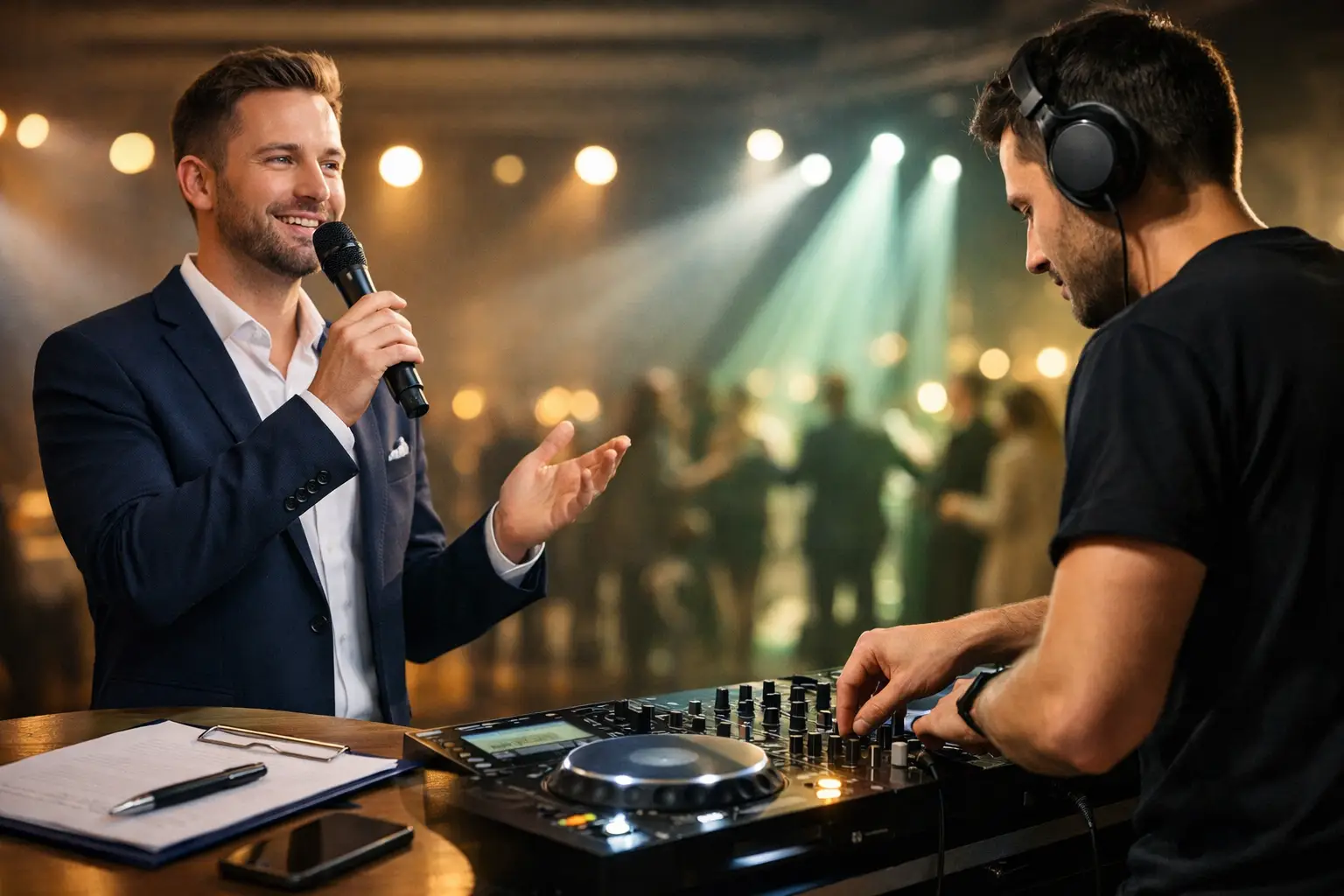
At many large events, the task doesn't end with the music. It often involves introductions, transitions between program items, or the proper microphone presence. This doesn't mean a DJ should talk constantly. On the contrary, good moderation is precise, fitting, and never intrusive.
This point, in particular, is often misjudged. Some events require little moderation, while others benefit greatly from it. For company parties, anniversaries, or public events, handling the microphone and audience confidently can be crucial. Therefore, it's worth asking if the DJ also has experience in this role.
Timing is everything. The best song won't work if it comes at the wrong moment. The strongest statement will fall flat if it's presented unprepared. A DJ with event experience senses when energy needs to be built up, when to elegantly pull back, and when the right moment has come to truly open up the dance floor.
Technology is not a side topic
For a large event, it's not enough for „sound to be there somehow.“ Sound systems must match the room size, speech intelligibility must work, and lighting can also greatly contribute to the impact. Depending on the event, the DJ works with existing event technology, their own equipment, or in collaboration with external partners.
The most important thing is clear responsibilities. Who delivers what, who sets up when, who is the on-site contact person, and how are sound checks and workflows coordinated? If these questions remain unanswered, unnecessary pressure will arise on the day of the event.
This is precisely why professionalism before the event is so valuable. Those who plan in a structured way spare the organizer chaos. And those who rely on experience ensure that guests talk about the atmosphere in the end – not about mishaps.
Why personality still matters for large events
Despite all the grandeur, every event remains an emotional moment. It's about impact, atmosphere, and often the desire to connect people. Therefore, a DJ who takes their audience seriously doesn't stop at technology and workflow. They bring Heart, intuition, and genuine attention with.
That's not a soft factor, but often the reason why an evening works. People notice whether someone is just going through their set or truly passionate about the event. You can feel this attitude in the music selection, in reliability, and in the way requests and situations are handled.
Anyone planning a large event doesn't need a lucky break, but a partner who provides security and creates excitement at the same time. Experience, personal coordination, and a clear understanding of the audience stand for exactly that. At https://djgerreg.de you can see what this claim looks like in practice.
What constitutes a good booking decision in the end
You don't make the right choice based on who advertises the loudest, but on who truly understands your event. A good DJ realizes that a large event is always made up of many small, crucial moments. They know when leadership is needed, when flexibility counts, and when music needs to say more than any concept paper.
If you choose carefully, you'll create the foundation for an evening that not only works, but captivates people. And that's exactly what it's all about: full dance floors, relaxed hosts, and memories that last long after the last song has faded.
Book DJ GerreG now & secure your desired date in good time
Are you planning your wedding or another party?Then secure your DJ early! I'll be happy to accompany you from the planning stages to the last encore in the early morning hours. I'm really looking forward to your message! 🎶

🎧 More from DJ GerreG
👉 Website:
https://djgerreg.de
🎧 Spotify:
https://djgerreg.de/spotify
📸 Instagram:
https://instagram.com/djgerreg
Play button YouTube:
https://www.youtube.com/@DJGerreG
🛒 Buy songs (before release):
https://gmusiqrecords.de/shop