If you are faced with the question Event Moderator or DJ you stand, you are probably planning more than just Music in the background. You want your guests to know what's happening, for important moments to have an impact, and for the dance floor not to be empty later. This is exactly where the role your event really needs is decided – and whether an experienced DJ with a knack for hosting might be the strongest solution.
A good evening thrives on emotions, timing, and people. The best technology or the most beautiful venue are of little help if transitions are clumsy, announcements are too long, or the music misses the mark with the audience. That's why a closer look at the roles of the host and the DJ is worthwhile.
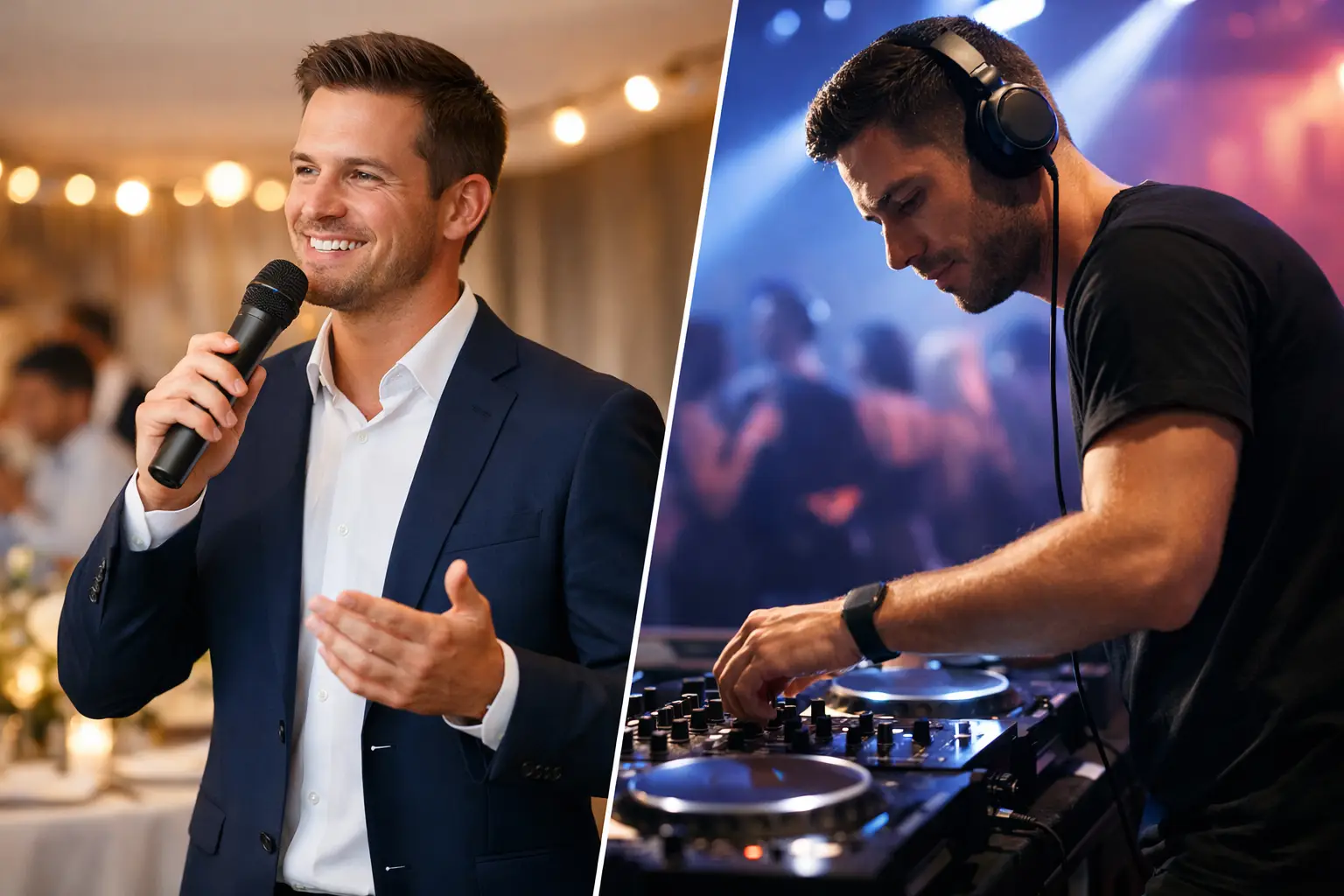
Event Moderator or DJ: The Decisive Difference
An event moderator guides the program linguistically. They welcome guests, introduce speakers, explain processes, connect program points, and maintain attention in the room. This can be enormously valuable, especially for events with many official parts. The moderator provides structure, creates orientation, and ensures that breaks do not feel awkward.
In contrast, the DJ creates the musical tension. He reads the Mood, responds to age groups, recognizes the right moment for a style change, and builds a dance floor that brings people together. His most important language is music. At a wedding, this can be the soulful accompaniment to the first dance, at a company party the right push after dinner, and at a family celebration the exact song that suddenly gets three generations dancing together.
The roles indeed overlap. A professional event DJ can handle short, clear announcements, confidently guide the proceedings, and announce important program items. However, this is different from a continuously present stage host with games, interviews, and many spoken contributions.
When a moderator is the right choice
A standalone host is particularly well-suited when spoken word is the focus. This applies to gala evenings, award ceremonies, large corporate events, trade fairs, or stage programs with multiple guests. When interviews are conducted, sponsors are involved, or complex content needs to be conveyed clearly, a professional who works with language, dramaturgy, and presence is required.
Even at a company celebration with an extensive program, a moderator can be useful. Perhaps there will be a year-in-review, awards ceremony, a raffle, several speeches, and a show act. In that case, a moderator will keep the thread going, while the DJ provides the emotional transitions: entrance music, jingles, music for winners, background sounds, and later the party.
What's important here is the chemistry between the two. A moderator shouldn't slow down the evening with endless announcements. A DJ needs information in good time so that the music and technology are perfectly coordinated. If this coordination is missing, unnecessary gaps arise – and your guests will notice them immediately.
When a DJ with MCing skills is a better fit
For most weddings, birthdays, anniversaries, and classic company parties, a full-time MC is not necessary. This isn't about managing a stage show. It's about welcoming people, framing special moments, and then allowing a celebration to unfold that feels easy and natural.
A DJ with confident, friendly moderation can excellently take on this task. He announces the wedding dance, accompanies the cake cutting, gathers guests for a group photo, or gives a clear announcement about the buffet. Brief, friendly, and at the right time. Afterwards, the focus is again on what many guests are looking forward to most: good conversation, good music, and full dance floor.
This often seems more cohesive than an additional person at the microphone. This is because the DJ knows the musical flow, sees the reactions in the room, and can act directly. If a speech runs longer than planned, he shifts the next musical cue. If the room is still quiet after dinner, he doesn't blindly launch into the next party hit, but builds the energy with feeling.
Restraint is a strength, especially at weddings. No one wants an emcee to take over the celebration. Your story, your guests, and your moments should be the focus. The DJ then becomes a present companion, not the main star.
The questions that make your decision easier
Before booking, don't just look at the title of the service. The flow of your celebration is crucial. Are there many program points with transition explanations needed? Should someone actively lead through the entire evening? Or do you primarily need a music professional who can confidently handle important announcements and provide the musical backdrop for the rest of the evening?
The number of guests also plays a role. With 40 to 100 guests, closeness usually develops on its own. A DJ who speaks personally and communicates clearly is often sufficient. With several hundred guests, a large stage, or a formal corporate setting, separate moderation can provide more security.
Also, ask yourself what kind of atmosphere you want. Relaxed, emotional, and dance-oriented? Then a DJ with hosting or ideal. Official, representative, and rich in programming? Then the combination of a presenter and a DJ might be the better choice.
Good moderation is more than just an announcement
Many underestimate how much the quality of an announcement influences the mood. Too quiet, too long, unprepared, or with inappropriate jokes – and a nice moment already feels strange. Good moderation needs a pleasant voice, clear words, and above all, a sense for when it's better to say nothing.
That's why I rely on announcements with purpose and feeling. Guests should understand what's happening next. The bridal couple should feel secure during their first dance. A jubilee recipient should be announced with dignity, without it turning into a stiff show. And when the dance floor calls, sometimes all it takes is one sentence – or simply the right song.
With international guests, another point comes into play: language. When German and English meet, announcements should sound understandable, simple, and natural. A short bilingual welcome can create a sense of closeness. However, a long moderation in two languages can slow things down. Here too, the right balance is key.
This is how you avoid double costs and unclear responsibilities
If you book the MC and DJ separately, clarify the tasks specifically beforehand. Who greets the guests? Who announces speeches and program items? Who plays the entrance music? Who keeps an eye on the schedule? Who reacts if the schedule shifts?
Without these arrangements, it's possible that both will wait for each other or unintentionally get in each other's way. This costs energy and makes an evening unnecessarily hectic. Joint planning creates security – for you, for the service providers, and for your guests.
At a celebration with a manageable program, the solution is often pleasantly simple: a experienced DJ takes care of music, technology, and the necessary moderation from a single source. This not only saves an additional booking but also reduces coordination efforts and gives you a single point of contact who keeps an eye on the entire evening.
Which solution fits which celebration?
For most weddings, a DJ with professional moderation is sufficient. The celebration should remain personal, the music should flow, and the transitions should work without excessive staging. A separate moderator is particularly worthwhile for an exceptionally large wedding or an extensive stage program.
At a family celebration or anniversary, a DJ with brief announcements is almost always the more appropriate choice. Here, memories, encounters, and spontaneous moments are the focus. Too much moderation can even disrupt the relaxed atmosphere.
At a company party, the goal is what matters. If the main aim is to celebrate and dance, a DJ can excellently handle the moderation of the key points. However, if there are awards, speeches from the board, presentations, and multiple show elements, a host is a sensible addition. The DJ then remains the specialist for sound, atmosphere, and the transition from an official event to a real party.
The best plan begins with a personal conversation.
The question at the end isn't simply: event host or DJ? The better question is: How should your celebration feel for you and your guests? If you want an evening that is clearly organized, yet warm, relaxed, and full of music, you need someone with experience, composure, and a good sense for people.
At DJ GerreG I won't just discuss music genres and song requests with you. We'll look at your event's schedule, special moments, and the kind of atmosphere you desire together. This way, you'll get precisely the hosting that will benefit your celebration – and enough space for what truly matters: happy guests, shared memories, and a dance floor full of life.
Book DJ GerreG now & secure your desired date in good time
Are you planning your wedding or another party?Then secure your DJ early! I'll be happy to accompany you from the planning stages to the last encore in the early morning hours. I'm really looking forward to your message! 🎶

🎧 More from DJ GerreG
👉 Website:
https://djgerreg.de
🎧 Spotify:
https://djgerreg.de/spotify
📸 Instagram:
https://instagram.com/djgerreg
Play button YouTube:
https://www.youtube.com/@DJGerreG
🛒 Buy songs (before release):
https://gmusiqrecords.de/shop