
Anyone who has ever experienced the opening dance at a wedding falter because the song started incorrectly knows immediately: Good Music planning for a wedding reception It's not a trivial matter. It decides whether goosebumps appear, whether guests stay seated, or whether the room fills with energy. That's precisely why it's worth not just ticking off music as an afterthought two weeks before the date.
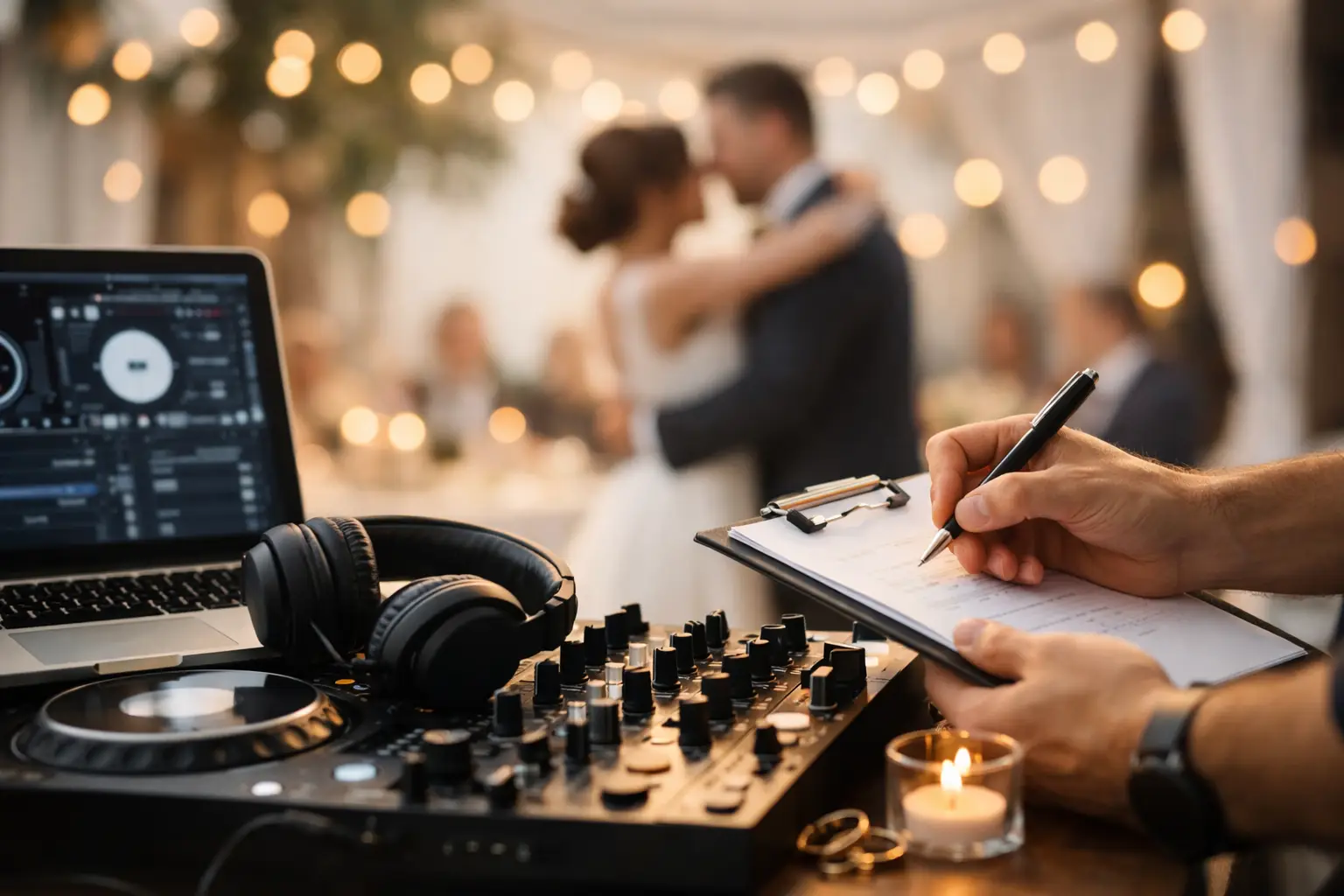
A great wedding reception is more than just beautiful songs. It thrives on the right song at the right time, an understanding of people, and a balance between emotion, entertainment, and dancing. As a DJ, I repeatedly see couples initially think in terms of genres – 80s, current hits, house, pop – and only later realize that the flow is at least as important as the song list itself.
Why Wedding Music Planning is More Than Just a Playlist
Spotify playlists are quickly created. However, a wedding reception doesn't follow a random order but a dramatic arc. During the champagne reception, music should be light and stylish. During dinner, it should create atmosphere without drowning out conversation. Later, clear impulses are needed to turn a lovely evening into a full dance floor.
This is precisely where the difference between music wishes and music direction lies. Someone who merely collects favorite songs hasn't planned a successful evening. Good music planning means anticipating moments: When should tears flow, when should there be laughter, when can things escalate, and when does the room consciously need a short break?
It's also about safety. If the best man spontaneously adds an item to the program, if the meal is delayed, or if the guests are older, more international, or more mixed than expected, the music has to keep up. A rigid plan can quickly break down in such situations. A good music plan remains clear but flexible.
Music planning for a wedding celebration starts with you – not with genres
The most important question isn't: What's going well right now? The most important question is: Who are you as a couple? Your wedding shouldn't feel like some generic playlist, but like you. This doesn't just apply to the opening dance, but the entire evening.
Some couples want an elegant start and later a party with a club vibe. Others want lots of classics so that three generations can celebrate together. Still others want to include international music because family and friends are traveling from different countries. All of that can work. The crucial thing is that it fits together.
I always recommend that couples talk about memories rather than genres first. What songs are part of your story? What music do you like on road trips, at parties, on vacation? What songs are a definite no-go? These answers often create a much clearer picture than the mere statement that you listen to „basically everything.“ Because „everything“ is rarely helpful in practice.
The phases of a wedding require different energy
A common mistake is to anticipate the party too early with music. If too much pressure is created right from the start, the impact often fizzles out later. Every phase has its purpose, and the music selection should be aligned with that.
Reception and Arrival
Lightness counts here. Soul, acoustic pop versions, relaxed lounge tunes, or stylish classics create an open atmosphere. Guests arrive, greet each other, find their bearings. Music should carry, not push.
Dinner and conversations
Restraint is called for when it comes to food. Too much energy is disruptive, too little presence makes the space feel empty. Instrumental tracks, subtle pop and soul songs, or elegant mid-tempo tracks often work very well. A lot depends on the volume. Even the right song sounds wrong if it's too dominant.
Program items and transitions
Speeches, wedding cake cutting, surprises, or entertainment all require musical preparation. Not every moment needs a full song, but almost every moment benefits from a clean musical framework. This appears professional and removes the hustle from the proceedings.
Party and dance floor
Now it's about dynamics, timing, and reading the audience. The perfect party starter isn't automatically the hardest song. Often, you need a track that many people understand and feel immediately. From there, the mood can grow. The art lies in engaging different age groups without becoming generic.
Wishlist Songs, No-Gos, and Reality on the Dance Floor
Of course, your favorite songs should have their place. At the same time, a celebration needs balance. If a request list consists only of very personal ballads or very special niche tracks, that may be emotionally right for you, but it can be difficult for guests. This is not a contradiction, but normal event practice.
That's why three lists make sense: Must-plays, Nice-to-haves, and absolute No-Gos. Must-plays contain the tracks that are really important to you. Nice-to-haves provide musical direction. No-Gos prevent unpleasant surprises. This leaves room for spontaneous reactions to guests without losing control.
Honesty pays off when it comes to deal-breakers. If you don't want a party killer, say so clearly. If certain Schlager songs, après-ski hits, or individual artists are out of the question for you, that should be openly discussed. Nothing is more dangerous for the mood than false consideration during planning and later disappointment at the party.
What many couples underestimate when planning music
Most people think of songs first. I think of impact first. A packed dance floor isn't created by hits alone, but by trust in the flow of the evening. Guests are more likely to dance when transitions are right, when the start isn't bumpy, and when they sense that someone is truly leading the mood.
The generational question is also underestimated. A wedding is rarely just a party for friends. Parents, aunts, colleagues, bridesmaids/groomsmen, and children share the same space. Good music planning, therefore, doesn't mean pleasing everyone at the same time. It means giving everyone their moment over the course of the evening.
The length of the celebration also plays a role. Those who want to celebrate until 2 a.m. shouldn't burn through all the highlights at 8:30 p.m. Those who only have a short evening window need a different dramatic arc. So, it always depends on what your schedule looks like, how your audience ticks, and what kind of atmosphere you really want.
Working with a DJ or Band – the Difference in Planning
When you work with a DJ, music planning for a wedding reception is usually more flexible. Transitions can be adjusted spontaneously, requests can be incorporated situationally, and the evening remains fluid. This is especially valuable if program points are delayed or the audience reacts unexpectedly.
A band brings its own live energy for this, but is often more tied to setlists and breaks. Both can be great. All that matters is that you adapt your planning accordingly. Those who want maximum musical breadth and quick reactions will benefit in many cases from a experienced wedding DJ with a real feel for the space.
This is precisely why the initial consultation is so important. It reveals whether only titles are being requested or if there's a genuine understanding of what's important to you. When experience, people skills, and musical breadth come together, the result isn't a generic program, but an evening with a personal touch. At https://djgerreg.de, this very personal coordination is a central part of the work.
This is how your wedding music becomes personal and still party-ready
The best solution is rarely at an extreme. Neither solely mainstream hits nor just heartfelt songs can carry an entire evening. It becomes strong when both come together. A personal introduction, targeted emotional moments, and later a party mix that truly reaches the guests – this is often the combination that makes weddings unforgettable.
It is helpful if you consciously determine your three to five most important musical moments. For example, entrance, reception, cake cutting, first dance, and party start. Once these points are set, the rest will be significantly easier. Then, not every minute needs to be pre-planned, but only the framework within which the atmosphere can surely grow.
Also, leave room for real life at your celebration. Not every great moment can be planned. Sometimes the whole family suddenly dances to a classic that nobody expected. Sometimes a song from your friends' youth hits better than any current chart-topper. It's precisely these moments that make weddings lively—when the planning is good enough to allow for them.
If you plan your wedding music with your heart and think professionally at the same time, you're not just giving yourself good songs, but real security for the evening. And this is exactly what creates the moments that you will remember for years to come - not because everything was perfect, but because it felt just right.
Book DJ GerreG now & secure your desired date in good time
Are you planning your wedding or another party?Then secure your DJ early! I'll be happy to accompany you from the planning stages to the last encore in the early morning hours. I'm really looking forward to your message! 🎶

🎧 More from DJ GerreG
👉 Website:
https://djgerreg.de
🎧 Spotify:
https://djgerreg.de/spotify
📸 Instagram:
https://instagram.com/djgerreg
Play button YouTube:
https://www.youtube.com/@DJGerreG
🛒 Buy songs (before release):
https://gmusiqrecords.de/shop


