
A song of your own isn't a luxury reserved only for artists. If you want to surprise someone special, find a wedding gift, or capture a memory forever, you can Have a song produced privately be exactly the right thing. The difference from any quick demo from the internet is palpable: it's not just about music, but about feeling, recognition, and a moment that sticks.
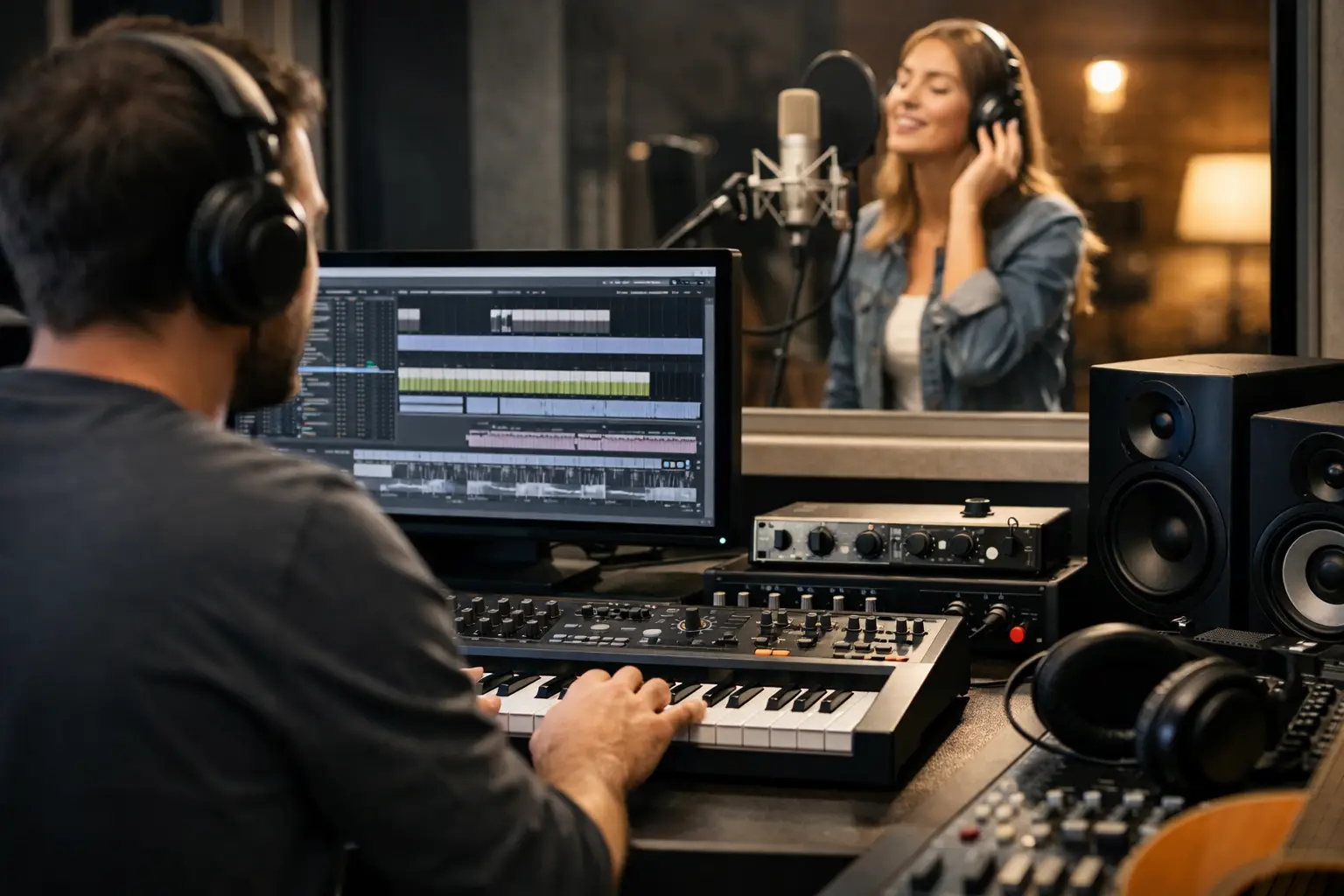
When it's really worth it to have a song produced privately
There are occasions when a personalized song can evoke more emotion than any purchased gift. A wedding is the most obvious example. When your story, your inside jokes, and your mood are captured in a custom title, it often becomes one of the most emotional moments of the entire day.
It also works just as well for anniversaries, milestone birthdays, Family celebrations or as a surprise for a partner. Some want to give a song as a gift, others want to sing themselves. Still others have only an idea in mind, perhaps a snippet of lyrics or a chorus, and wish for someone to turn it into a finished track.
This is exactly where a hobby ends and real production begins. A personal song doesn't have to be radio-ready. But it should be produced in a way that it touches people, sounds clean, and fits you. Otherwise, the big idea quickly turns into something that's well-intentioned but musically unsustainable.
What you're actually buying - and what you're not
When you have a song produced privately, you're not just buying a few studio hours. You are buying experience, musical intuition and the ability to turn an emotional idea into an audible result. This starts long before the recording.
The first question is always: What should this song trigger? Should it be romantic, danceable, humorous, epic or completely reduced? The clearer this core is, the better the result will be. You can recognize a good production not by the fact that as much as possible happens, but by the fact that everything fits together.
What you shouldn't expect: that a masterpiece will automatically emerge from three keywords. Even with a private commission, good results need preparation. The more real information, memories and musical preferences you bring with you, the more personal the song will be.
This is how it works in private practice
The process is usually much more relaxed than many people think. You don't have to be a musician or a studio professional. The important thing is that you can say who the song is for and what mood it should have.
It all starts with a conversation. This involves the occasion, style, desired length and the question of whether a completely new song should be created or whether an existing idea should be developed further. Some customers come with a text, some with just a story. Both are possible.
This is followed by the creative phase. Melody, harmony, rhythm and arrangement are built up so that the title is coherent. If vocals are included, the next important question arises: will you sing yourself, will the recipient sing or will an experienced singer take on the vocals? This is often an emotional issue, especially in private. Your own voice can be imperfect, but incredibly genuine. A professional singer sounds more rounded, but sometimes a little less personal. It depends on what is more important to you.
In the next step, it will be recorded, edited, and mixed. This is where it's decided whether the song sounds like a demo or a professional production. Timing, intonation, timbre, and volume ratios must be spot on. Finally, mastering is done so the track sounds good on a phone, in a car, or through the sound system at a party.
Having a song produced privately - what costs are realistic?
That's the question that almost always comes first. Understandable. The prices can vary greatly because the work involved varies greatly. A simple song with an existing idea and a manageable arrangement costs significantly less than a complete commissioned production with lyrics, composition, singer, several rounds of corrections and a final mix.
If someone promises you an extremely cheap all-inclusive price, you should take a closer look. Often, this means standard building blocks, little customization, and a result that sounds interchangeable. This is a shame, especially with a personal song, because you don't just want any file, but a title with meaning.
Realistically, quality costs time. Anyone who has a song produced privately should not only look at the final price, but also at the scope. Is the consultation included? Is the composition customized? Are there any adjustments? Is the mix professional? Are usage rights clearly discussed? In the end, these points make the difference between a nice idea and a song that you are really proud to give away or listen to yourself again and again.
The most common mistake: starting too late
A personal song doesn't just happen spontaneously. Especially not when it has to be ready by a set date – for a wedding, anniversary, or birthday, for example. Creative work needs space. Recording, coordination, and any necessary revisions do too.
Many only get the idea at the last minute to quickly have a song made. This can work, but it puts all under pressure and often takes the ease out of the project. If the moment is important to you, plan early enough.
Another mistake is the false expectation of perfection. Private does not automatically mean glossy like in the charts. And it doesn't have to be. A song that is honest and approachable often has a much stronger effect. If the emotion is right, the heart forgives small edges more quickly than arbitrariness.
Which style suits your occasion?
Not every personal song has to be a ballad. Something with more energy works great, especially at celebrations. A wedding song can be romantic, but also modern, light, and groovy. For birthdays, it can be more humorous. For an anniversary, a mature, warmly produced sound often fits better than something completely trend-driven.
It is crucial that the style not only appeals to you, but also fits the situation. A song that works well in the living room doesn't necessarily have to have the same effect at a party with guests. If the song is to be played live or even performed, the production should take this into account.
This is precisely why experience from event practice is so valuable. Anyone who has been working with music for real people and real moods for years listens to songs differently. It's not just about what is musically possible, but what works emotionally.
Personal does not mean cheesy
Many people initially worry that an individual song could quickly come across as embarrassing. This fear is justified - if you overload it. Too much pathos, too many clichés, too much sugar-coating and the effect is lost.
A good private song remains concrete. It works with real images, small details, and language that suits you. Not everyone has to write poetically. Often the most honest lines are the strongest. A sentence that only two people truly understand can trigger more than any grand metaphor.
Musically, too, less is often more. If the focus is on the lyrics, you don't need ten tracks and huge effects. And if the production should be more danceable, the personal reference can still remain. Emotion and groove are not mutually exclusive.
What you should look out for when choosing a producer
Don't just rely on fine words. Listen to whether your counterpart understands what you really have in mind. A good producer asks questions, thinks along with you and translates your idea into something tangible. They don't just impose their style on you.
It is also important whether you feel comfortable as a person. Private music projects are particularly close. It's about relationships, memories and sometimes also very personal stories. If the chemistry isn't right, the result is rarely really good.
Also pay attention to practical relevance. Those who don't just create music on a screen, but know how songs work at real parties, in emotional moments, and in front of people, bring a valuable perspective. This is precisely a great advantage when Music Production and event experience come together – such as with DJ GerreG.
What really matters in the end
When you have a song produced privately, you are not ordering an off-the-shelf product. You are having a moment set to music that only exists once. That's why it's worth deciding not just on price or speed, but on feeling, experience and the ability to tell your story in a musically credible way.
A good personal song doesn't have to be perfect. But it must trigger something. If it gives you goosebumps the first time you hear it, makes you smile or makes everything else stand still for a moment, then the music has done exactly what it is supposed to do.
Book DJ GerreG now & secure your desired date in good time
Are you planning your wedding or another party?Then secure your DJ early! I'll be happy to accompany you from the planning stages to the last encore in the early morning hours. I'm really looking forward to your message! 🎶

🎧 More from DJ GerreG
👉 Website:
https://djgerreg.de
🎧 Spotify:
https://djgerreg.de/spotify
📸 Instagram:
https://instagram.com/djgerreg
Play button YouTube:
https://www.youtube.com/@DJGerreG
🛒 Buy songs (before release):
https://gmusiqrecords.de/shop


