
Wedding DJ vs. Live Band: The comprehensive comparison for 2026 - Whether you're in the middle of planning your wedding or just gathering initial ideas, the choice between a wedding DJ and a live band can have a big impact on the character of your day, even the mood at dinner. Music isn't just background here: it can enhance emotions, create special moments and surprisingly often get guests dancing, even those who would otherwise be reluctant. But which option really suits your celebration? The comparison for 2026 shows differences, typical prices, current trends and tips that can be used immediately.
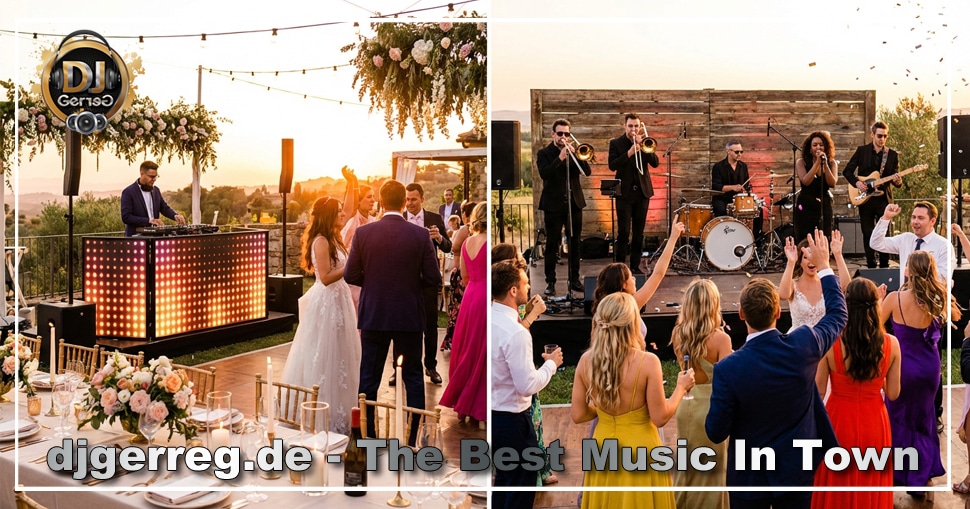
It becomes clear how DJs and bands differ in terms of costs, atmosphere, flexibility and space requirements. You will also find out which music genres are currently popular and which technology is usually used discreetly but effectively. This will make it easier for you to find the option that suits your style and budget.
Wedding DJ vs. live band - costs and budget: what you can expect in 2026
Anyone organizing a wedding quickly realizes: the budget is always involved, not the most romantic part, but unavoidable. According to figures from 2025, couples in Germany spend Wedding DJ usually between 800 and 2,000 € out. For a live band, the usual prices tend to be between €1,500 and €4,000, and if it's a particularly popular group, it can be €5,000 or more. As you can see, DJs are often much cheaper, sometimes even half the price.
| Music option | Price range | Space requirement |
|---|---|---|
| Wedding DJ | 800, 2.000 € | Less |
| Live band | 1.500, 4.000 € | More |
Especially when money is tight, a DJ can often offer a surprisingly wide selection of music, from 80s hits to current charts, and at a lower price. With a band, a large part of the money goes towards the live performance and the number of musicians, which quickly adds up. In addition, there are sometimes travel costs, overnight stays or special equipment hire, especially for larger shows. DJs often charge a total price including travel and equipment, while bands tend to charge for playing time and extras separately. And the playing times? DJs often play the whole evening, while bands usually play two to four sets. These differences have a direct impact on the budget and should ideally be taken into account right from the start.
It gets really intense here, and yes, right into the heart. A live band often brings that special energy that you can feel from the very first song. The musicians pick up on the mood in the room, react spontaneously and create moments that can only happen at that exact moment. Slow dances or very emotional songs often give you goosebumps, which for many is the best moment of the evening. The image of real musicians on stage, hands on the strings, gleaming instruments and palpable emotions in the spotlight makes the experience even stronger. Guests usually feel more directly involved when the artists are so close. And when they laugh, chat or spontaneously sing along, it is often reminiscent of an evening with good friends.
DJs, on the other hand, score points with smooth transitions and a huge selection, from oldies to chart hits. They mix genres, fulfill spontaneous requests and use technical extras such as colourful light shows, LED walls or fog. This quickly creates a modern, energetic party. They control the flow clearly: quiet music for dinner, later driving beats that fill the dance floor. A good DJ senses the mood and sometimes surprises with a song that nobody expects, and suddenly the whole room is dancing.
Flexibility and repertoire
DJs often have the advantage of being able to change music styles very quickly. They can easily jump from pop to jazz, from current chart hits to oldies, and sometimes even land on a genre that is currently in vogue (even the secret favorites that only a few people know). With a well-compiled playlist, they usually reach guests from very different age groups. They often notice when the mood in the room changes after just a few songs and respond immediately with suitable music requests. At international weddings or celebrations with a cultural mix, it is usually easy to incorporate different language versions or typical classics, from Italian ballads to Turkish pop, without long preparation.
Live bands, on the other hand, usually work with a fixed set that they can play perfectly. New songs are possible, but require rehearsals and coordination, which can sometimes be stressful behind the scenes. On the other hand, bands like to give well-known songs their own touch, often surprisingly different from the original, which gives a song much more character. However, switching between very different genres is usually more work for bands. If you want to offer your guests the widest possible choice of music, you can combine a DJ and a band or use a band that has more flexibility with a playback system.
Space requirements and logistics
Many people underestimate how much space a band really needs. It's not just about the musicians, but also about guitar stands, drum sets, amplifiers and sometimes even a small stage, which takes up a surprising amount of square meters. In small venues, it quickly becomes very cramped, which sometimes seems cozy, but is often rather impractical. The set-up also takes longer: bands are often there hours before the start to lay cables, set up speakers and do a test run. If the acoustics aren't right, the music quickly sounds less impressive than planned.
A DJ, on the other hand, usually travels with much smaller equipment. Even with a few lighting effects, the set remains compact, leaving more space for the dance floor or creative decorations. A power socket and a sturdy table or booth are often enough, and the lugging around is manageable. Set-up and dismantling is quick and breakdowns are rare. This is particularly noticeable at locations with difficult infrastructure such as old buildings, tents or beach bars.
If space is tight, a DJ often seems like the more relaxed choice. At large open-air events, on the other hand, a band carries the sound far and wide, which can be really impressive in the open air.
Trends and innovations for 2026
In 2026, wedding music is all about personalization, regardless of whether a DJ or a live band is booked. Couples want the playlist to tell their own story and not just play the usual standard program. With DJs, this often means a mixture of favorite songs and current chart hits, supplemented by little surprise tracks that provide laughs or special moments. Technology is becoming increasingly exciting: LED displays with the couple's names or the wedding hashtag are no longer a rarity. Augmented reality effects that light up to the rhythm or show animated figures now even appear in the middle of the dance floor.
Live bands focus on creative genre mixes, from Motown to jazz to indie. Formats in which DJs and musicians perform together to create a special sound are particularly popular. Environmentally friendly ideas such as energy-saving technology, local acts and well thought-out transportation routes are becoming more important. And „silent discos“? These are on the rise at venues with strict noise regulations, but still ensure a lively atmosphere.
Advantages and disadvantages at a glance
DJ advantages:
-
Usually much cheaper than a live band
-
Very flexible music selection, which can also be changed spontaneously if the mood changes
-
Takes up very little space, fits comfortably in a corner or right next to the dance floor
-
Technology can really make an impression, for example with colorful light shows or fog machines
DJ disadvantages:
-
Often feels less „live“ as no musician speaks directly to the audience
-
Sound depends heavily on the system, weak speakers can dampen the mood
Band advantages:
-
Live performances with direct contact, you can feel the energy immediately
-
Unique versions of songs that are rarely heard again
-
Often evokes strong feelings, especially at moments like the first dance
-
A visual highlight with instruments, stage lighting and movement
Volume disadvantages:
-
Usually much more expensive than a DJ
-
Requires plenty of space for stage, instruments and technology
-
Less flexible repertoire, some songs cannot be played spontaneously
Stamina also counts: DJs often play for hours without a break, while bands need breaks, which can easily be compensated for with a DJ or playlist. Technical problems usually affect DJs with equipment; with bands, even one sick member can disrupt the proceedings. In the end, it's not just about the price, but also about the flow, atmosphere and the risk of minor mishaps.
Once you have made your choice, it is worth obtaining quotes directly. On https://djgerreg.de/ there are many ideas and tips, for example how you can organize the process in a relaxed way.
Your path to the perfect decision
In the end, what matters most is what kind of atmosphere you want for your celebration, rather cozy and relaxed or energetic and exuberant, and how free the choice of music may be. The budget often plays a bigger role than you would like, and the question of whether there is enough space for a stage or DJ booth should not be forgotten. Some people also consider whether impressive light shows or direct contact with the musicians are more important. A small wish list can help: perhaps long dance nights, special live moments, a rousing show or a music program that fits your ideas exactly.
2026 is likely to bring even more creative music ideas to weddings. There are already DJs with eye-catching LED desks that are visually stunning and bands that make every corner of the venue resound. The important thing is that the sound suits you and gets your guests involved. It is worth paying attention to the age mix in the audience: DJs can often respond to the mood at lightning speed, while bands usually create a strong sense of community through their presence.
Still unsure? Just go to a public band performance or a DJ evening. You'll quickly notice what you like. Good tips often come from friends or from detailed online reviews.
Book DJ GerreG now & secure your desired date in good time
Are you planning your wedding or another party?Then secure your DJ early! I'll be happy to accompany you from the planning stages to the last encore in the early morning hours. I'm really looking forward to your message! 🎶

🎧 More from DJ GerreG
👉 Website:
https://djgerreg.de
🎧 Spotify:
https://djgerreg.de/spotify
📸 Instagram:
https://instagram.com/djgerreg
Play button YouTube:
https://www.youtube.com/@DJGerreG
🛒 Buy songs (before release):
https://gmusiqrecords.de/shop


