
The dance floor doesn't tip over because of a single hit. It tips over because the right song comes on at the right moment. That's exactly why the Wedding Music Trends 2026 While exciting, it’s never more important than your audience, your story, and a well-structured evening. Those who only plan according to playlist trends often get a modern concept on paper – but no real atmosphere in the room.
In 2026, I foresee one main development: wedding music will become more personal, bolder, and significantly less formulaic. Couples no longer want a celebration that sounds like a hundred others. At the same time, the music shouldn't be overly intellectual. It's not about making a musical impression, but about hitting emotional chords. Therefore, the best trend isn't a genre, but a clear return to music with meaning.
Wedding Music Trends 2026: What's Really Changing
Many bridal couples today wish for an evening with character. The time of rigid standard sequences with a few obligatory classics and arbitrary Top 40 hits is losing importance. Instead, weddings with a clear musical thread are emerging. This starts with the reception and doesn't end with the last dance floor hit.
It's noticeable that in 2026, music will be more consciously tailored to individual mood phases. Champagne reception, dinner, first dance, party, late-night finale – each section will receive more attention. While this might sound obvious at first, it's often underestimated in practice. When each phase has its own musical purpose, the entire evening feels more valuable and cohesive.
Equally strong is the desire for a mix of familiar and personal. Guests want to sing along, dance, and feel safe. However, the couple doesn't want the same playlist as their best friends' wedding. This is exactly where experience counts. Those who only chase trends often lose balance. Those who can read the guests will combine modern hits, timeless anthems, and personal favorites in a way that feels organic.
Less genre thinking, more mood
A big mistake when Wedding planning The question is: What genre will be popular in 2026? The better question is: What mood should be created and when?
Afrobeats, House, Disco-Revival, Deutschpop, 2000s nostalgia, and international crossover sounds will remain in demand in 2026. But no style works automatically. An elegant dinner mix can work wonders with soul, relaxed pop, and light organic house elements. At another wedding, more acoustic pop, lounge, or a dash of Latin might be more fitting. The trend isn't about either/or, but about fluid transitions.
At parties right now, genres are blurring. In the past, music was often thought of in blocks – first classics, then charts, then party hits. In 2026, there will be more mixing. A modern club track can work right alongside a 90s classic if the tempo, energy, and timing are right. Audiences today listen more broadly than they did just a few years ago. This openness is a huge opportunity – but only if someone behind the decks knows when a style change works and when it ruins the mood.
The 2000s and 2010s remain a safe bet
People getting married today often grew up with music from the 2000s and 2010s. That's precisely why these years remain a strong driver for packed dance floors. Not just ironically or nostalgically, but genuinely. Many of these tracks are emotionally charged and instantly danceable for today's wedding generation.
This doesn't mean the party will become a themed event. The best nights use these songs as emotional anchors, blending them with current tracks and timeless classics. This creates not a retro night, but a familiar, vibrant flow.
Disco, Funk, and Groove instead of pure volume
Another clear trend: More groove, less blunt pressure. Disco-inspired sounds, funk elements, and danceable pop with warm bass often engage guests better than constant maximum-energy music. This works particularly well at mixed events because this music connects generations.
This is an important point for weddings with a family audience. Not every guest wants a club atmosphere, but almost everyone responds to rhythm, familiarity, and a good mood. That's often where the magic lies.
The opening dance will be more individual.
When looking at wedding music trends for 2026, it's also noticeable that the classic first dance is being approached more freely. Romantic ballads remain popular, of course. At the same time, more and more couples are daring to choose more unusual songs, shorter choreographies, or transitions into a faster party segment.
This is often the better solution than a forced waltz that doesn't suit you. When you truly identify with a song, you can feel it in the room. A personal song has a stronger impact than any tradition chosen out of a sense of duty.
Nevertheless, the following applies: personal does not automatically mean perfect. A very obscure, quiet, or clunky song can be emotionally powerful, but it can make the transition to a party difficult. In such cases, it is worthwhile to build up the moment cleverly – for example, with a shortened version or a musical switch after the first part. Good dramaturgy trumps pure idealism here.
International influences continue to grow
Weddings are becoming more culturally diverse. Many couples and guests bring different musical backgrounds, and this will be even more evident in 2026. International pop hits, Latin, Balkan beats, Oriental pop, French classics, Italian evergreens, or African-influenced dance sounds are no longer exceptions.
This is a win for the celebration if these influences aren't treated like a mandatory checklist. It's not about ticking off every origin. It's about creating genuine connections. When a song has family significance or a particular style emotionally resonates with multiple groups of guests, it often becomes one of the evening's most powerful moments.
Just at International weddings shows how valuable good preparation is. Requested music is important, but even more important is assessing when which impulse will come. A Strong DJ doesn't think in song titles alone, but in people, moments, and energy.
Live elements, yes – but not at any cost
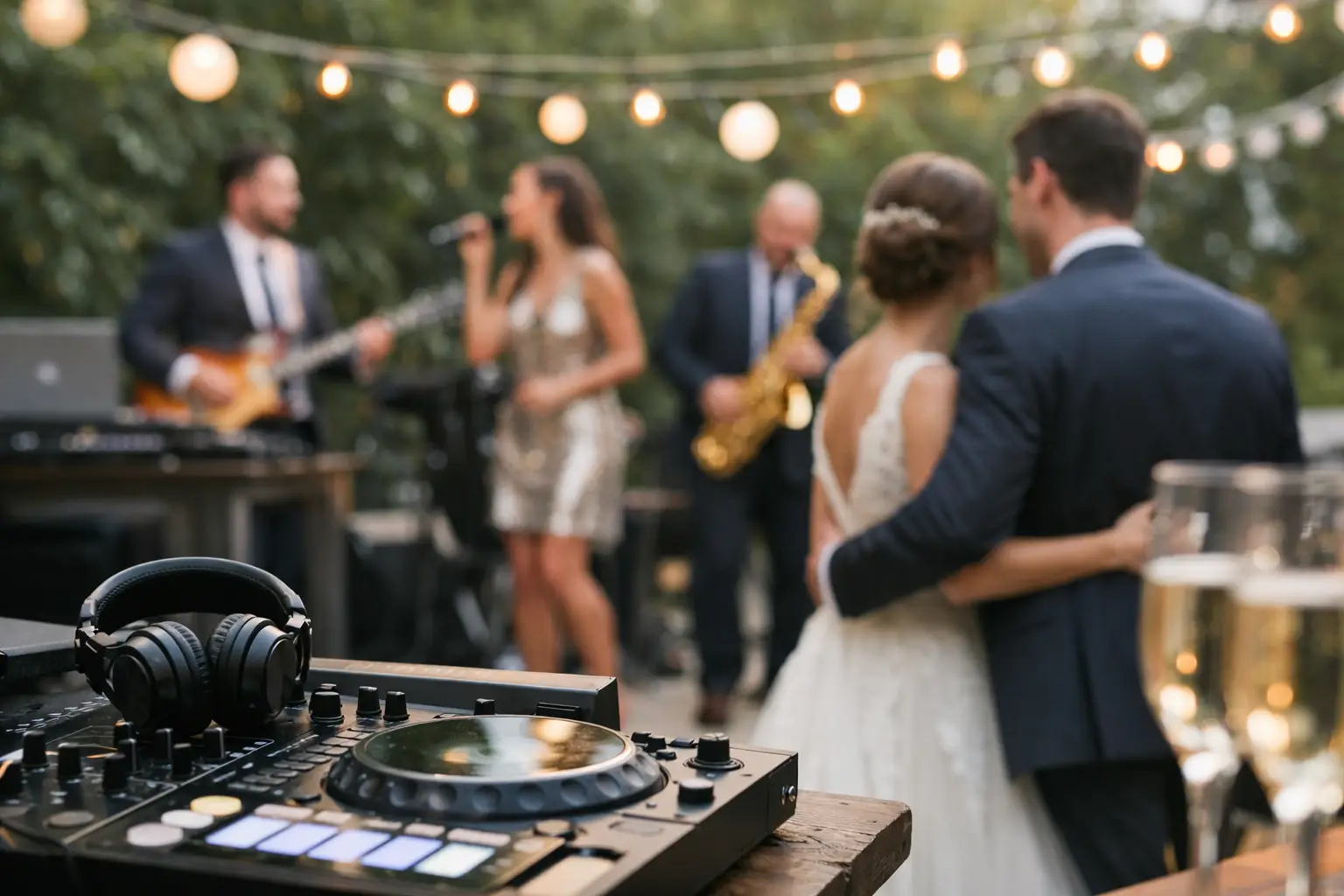
In 2026, the combination of a DJ and live elements will remain attractive. Saxophone, percussion, vocals, or short live performances during the reception can create a high-quality atmosphere. This works particularly well when it suits the size of the celebration and the style of the evening.
But not every wedding needs this expansion. Sometimes a good idea turns into an unnecessary cost block or a disruption in the flow. If technology, space, or timing are not carefully planned, the mood is more likely to suffer than improve. Therefore, those who want to incorporate live elements should think less about the effect and more about whether the overall flow will truly improve.
What wedding couples misjudge more often in 2026
The biggest mistake remains the assumption that a Good playlist replaces an experienced DJ. A playlist has no awareness of the room, no nervousness, no spontaneous twists, and no audience that suddenly reacts differently than expected. A wedding means dynamism. People get in the mood, withdraw, want to be surprised, or need reliability. Music has to respond to exactly that in real-time.
A second common point is overplanning. Of course, must-play songs and no-gos make sense. It becomes problematic when the music is nailed down from beginning to end. Then there's little room left to react to the actual mood. The best party has structure, but also breathing room.
And then there's the question of trends themselves. What's considered popular online doesn't automatically work at your wedding. A viral song can be great – or fizzle out after 40 seconds. Reach doesn't guarantee dancing.
How to find the right music for your wedding
If you want to use the wedding music trends for 2026 for your planning, don't think about genres first, but about situations. What atmosphere do you want for the reception? Should the dinner feel elegant, warm, or relaxed? How emotional can the first dance be? When should the party kick off – immediately or gradually?
After that, it gets personal. Which songs tell something about you? Which titles connect generations? Which music will definitely get your friends on the dance floor? And where is the point where individuality tips over into an ego trip? This honesty makes the difference.
From my experience, it's always clear: the strongest weddings aren't the loudest or the trendiest. They are celebrations where music is curated. With heart, with experience, and with an eye for the moment. That's when not just a party, but a memory is created.
If you marry in 2026, your music can be modern. It can be surprising, international, emotional, or wonderfully unreasonable. But it should always suit you and the people celebrating with you. Everything else might sound good in a playlist – but not necessarily like your evening.
Book DJ GerreG now & secure your desired date in good time
Are you planning your wedding or another party?Then secure your DJ early! I'll be happy to accompany you from the planning stages to the last encore in the early morning hours. I'm really looking forward to your message! 🎶

🎧 More from DJ GerreG
👉 Website:
https://djgerreg.de
🎧 Spotify:
https://djgerreg.de/spotify
📸 Instagram:
https://instagram.com/djgerreg
Play button YouTube:
https://www.youtube.com/@DJGerreG
🛒 Buy songs (before release):
https://gmusiqrecords.de/shop