
When couples Create a wedding guest playlist Behind it, there's almost always the same hope: everyone should find something for themselves, no one should feel excluded, and the dance floor should be alive from start to finish. This is exactly where it gets exciting – because a guest list full of music requests isn't yet a good wedding playlist. It's just raw material, at first. The art lies in creating an evening from many tastes that carries emotionally, functions musically, and doesn't sound like a random collection.
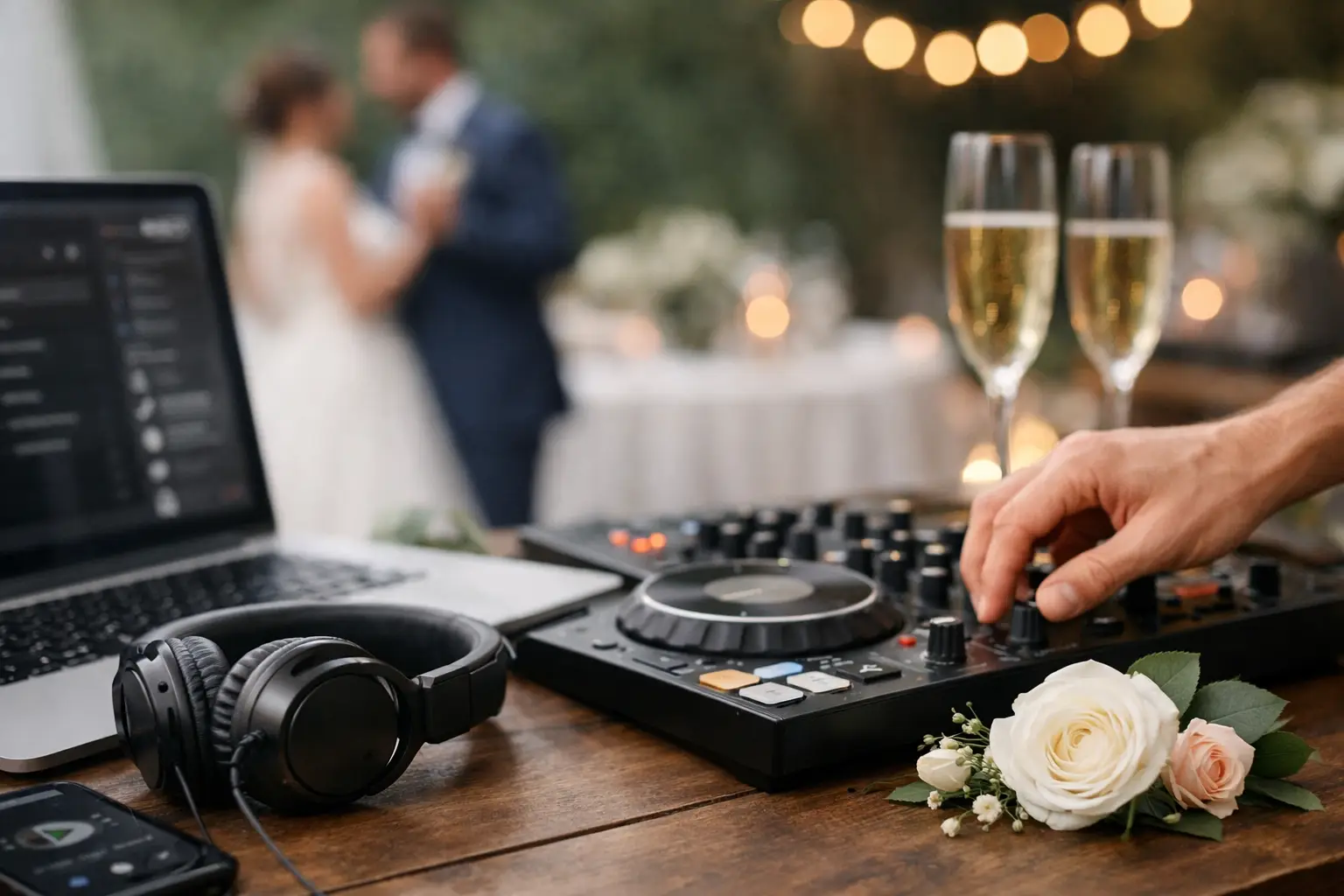
Why creating a wedding guest playlist doesn't mean it's a free-for-all
I experience it again and again: Bridal couples enthusiastically collect songs from friends, family, and colleagues. On paper, that sounds fair. However, in practice, worlds often collide. One person wants 90s Eurodance, the aunt loves Schlager, the best man wants Hip-Hop, and someone gets serious about seven ballads in a row.
If you want to create a playlist for wedding guests, you need not only good songs, but also a clear direction. A wedding is not random mode. It has several phases, different age groups, and emotional highlights. Music must this dynamic wear. Otherwise, you'll have fulfilled many wishes, but not created any atmosphere.
That's precisely why it's worth seeing guest requests as inspiration – not as a rigid setlist. A great evening isn't created by everyone getting their exact song. It's created by many people feeling understood and celebrating together.
How to collect music requests effectively
The best time to ask for music requests isn't three days before the celebration, but significantly earlier. If you collect requests in a timely manner, you can identify patterns. Perhaps certain decades keep reappearing. Maybe you'll notice that your guests prefer genuine classics over current charts. Clues like these are incredibly helpful.
Practically speaking, a simple question in the invitation or on your wedding website is: „Which song is guaranteed to get you on the dance floor?“ This phrasing is better than an open-ended "Wish for anything." It automatically leads to songs with energy and nostalgic value.
Lists where everyone can submit five to ten songs are less helpful. That sounds generous, but it quickly makes the selection arbitrary. One or two strong tracks per person are perfectly sufficient. This way, the collection remains manageable, and you still get a good sense of your guests' musical taste.
Which songs really belong on the guest list
Not every wish automatically fits the celebration. It's not a matter of right or wrong, but of timing, atmosphere, and the overall picture. A song can be great and still be completely out of place at this point in the evening.
Titles that multiple generations know, have a clear rhythm, and bring positive energy work particularly well. These can be classics from the 70s, 80s, 90s, and 2000s, as well as current party hits. What matters isn't the release year, but the reaction in the room.
Caution is advisable with very long songs, extreme stylistic breaks, or purely niche requests. If three friends love a track that nobody else knows, that can be a nice brief moment. But if too many such tracks play in a row, the shared mood falls apart. A wedding thrives on connection, not musical solos.
The most common mistakes when creating playlists
The biggest mistake is choosing music based solely on your own tastes. Of course, your wedding should reflect who you are. But it’s also a celebration with people who are there to share the experience, laugh, and dance together. That’s why a good playlist needs to strike a balance between personality and openness.
The second mistake is lacking dramaturgy. Many people put songs together without thinking about the flow. Yet the champagne reception needs a different energy than dinner, and the party needs a different arc than the first dance. Anyone who throws everything into a single list misses out on creating the right atmosphere.
The third mistake is paying too much attention to individual preferences. Yes, consideration is important. But if the playlist is nothing more than an attempt to please everyone, it loses its impact. Music needs to be allowed to take the lead. It should carry the evening, not just manage it.
Create a playlist for wedding guests organized by time of day
It's best to think in musical chapters rather than a long list. That's how you create a well-rounded evening.
Reception and Arrival
Music can be present at the reception, but it shouldn't dominate. Warm, stylish songs that put people in a good mood and allow for conversation are suitable here. Soul, relaxed pop classics, light lounge elements, or charming acoustic versions often work better than big party anthems.
Food and nuances
During dinner, less is almost always more. The music should carry, but not interfere with conversations. Overly hectic beats are disruptive, too many ballads drag the energy down. A fine balance of elegance, warmth, and recognizability helps here.
Party kickoff
After the meal, the mood often shifts in a new direction. This transition is musically crucial. It's time to get more rhythmic, but without being too abrupt. A few well-known songs with a good groove will slowly get people out of their chairs.
Prime time on the dance floor
Energy, timing, and understanding people are what count now. In this phase, songs that many people know and instantly connect with work well. Sing-along moments, dance classics, 90s hits, party pop, disco, and select Schlager songs can be very effective here – if they are placed wisely. It's not the genre alone that makes the difference, but the sequence and a feel for the space.
Late evening
Late at night, things can get more special. By then, it's usually the guests who truly want to party who remain. This is when you can be bolder and accommodate requests that might have been too specific earlier. That's exactly when personal favorite songs often get their perfect moment.
How to get different generations to work together
A wedding is almost always musical A mix of generations. That's exactly what makes it beautiful, but also challenging. If you focus on only one age group, you lose the other. That's why balance is needed.
The good news: there are an astonishing number of songs that work across generations. Classics with strong choruses, clear danceability, and positive memories often bridge gaps. It becomes more difficult with very current trends or very nostalgic niches. These can work well, but rather sporadically.
A proven method is to think in waves. First, a song for the broad middle audience, then a slightly younger song, then something again that the older generation will immediately recognize. This keeps the dance floor mixed. That's often where the magic happens, the kind you remember years later.
Guest wishes yes – but with clear boundaries
It is completely legitimate to define "no-go" songs or "no-go" genres. If there's certain music you absolutely don't want to hear at your wedding, that should be decided openly. The same applies to songs with unfavorable lyrics, unpleasant memories, or a vibe that doesn't suit you.
The important thing is that these boundaries are set clearly and early. Anyone who leaves everything open and only sorts things out spontaneously in the evening creates unnecessary unrest. A clean pre-selection with enough freedom for mood and surprise is better.
When it comes to music requests, less is often more. Prefer 30 to 50 really good, fitting tracks over 200 songs without a theme. Quality beats quantity – especially for a celebration that means so much emotionally.
When your own playlist is enough – and when it's not
If you just need background music for a small, relaxed setting, a self-made playlist can work well. The process is usually simpler then, and you don't need constant adjustment to the mood in the room.
However, as soon as a full wedding day with a reception, dinner, transitions, program items, and a dance party is planned, the limits of a rigid list quickly become apparent. A playlist doesn't react when the dance floor suddenly explodes. It also doesn't notice if a song isn't working at the moment, even though it looked perfect on paper.
This is precisely where experience makes the difference. A good DJ reads the room, recognizes dynamics, builds tension, and knows when a request is appropriate – and when five minutes later is a better moment. This not only ensures full dance floors but also smooth execution. For many couples, this is the biggest relief in the end.
If you want to collect music requests from your guests, that's a great idea. But don't turn it into a mandatory chore or a rigid set of rules. View the requests as your guests' input, not as a command center. That way, many individual ideas come together to form something that truly fits – and that's exactly how a wedding that stays in the heart feels.
Book DJ GerreG now & secure your desired date in good time
Are you planning your wedding or another party?Then secure your DJ early! I'll be happy to accompany you from the planning stages to the last encore in the early morning hours. I'm really looking forward to your message! 🎶

🎧 More from DJ GerreG
👉 Website:
https://djgerreg.de
🎧 Spotify:
https://djgerreg.de/spotify
📸 Instagram:
https://instagram.com/djgerreg
Play button YouTube:
https://www.youtube.com/@DJGerreG
🛒 Buy songs (before release):
https://gmusiqrecords.de/shop