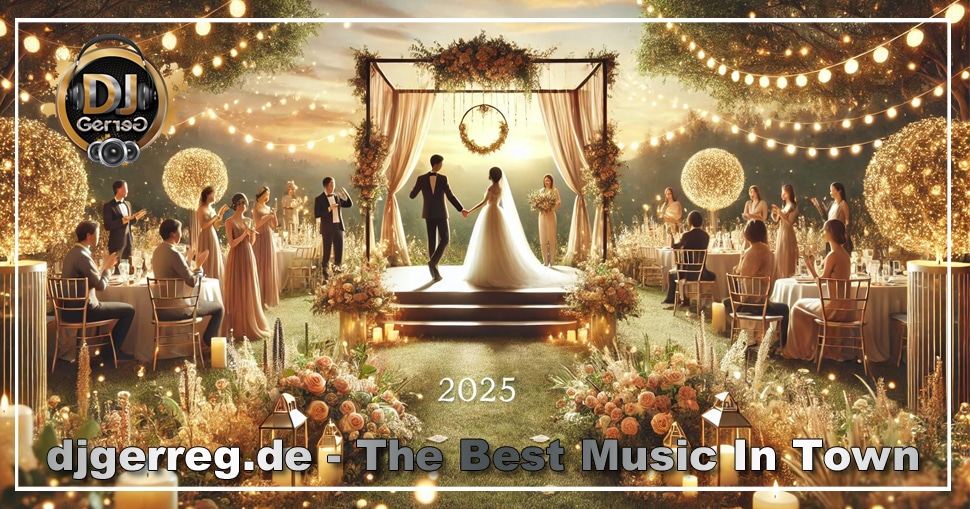
When at a wedding, grandparents are seated next to the wedding party, children are running around the hall, and later, college friends want to let loose, the music often dictates the entire evening. That's precisely why Music for a Multi-Generational Wedding not a side topic, but one of the most important points in the planning. It's not about pleasing everyone 100 percent. It's about building a common celebratory feeling out of many tastes.
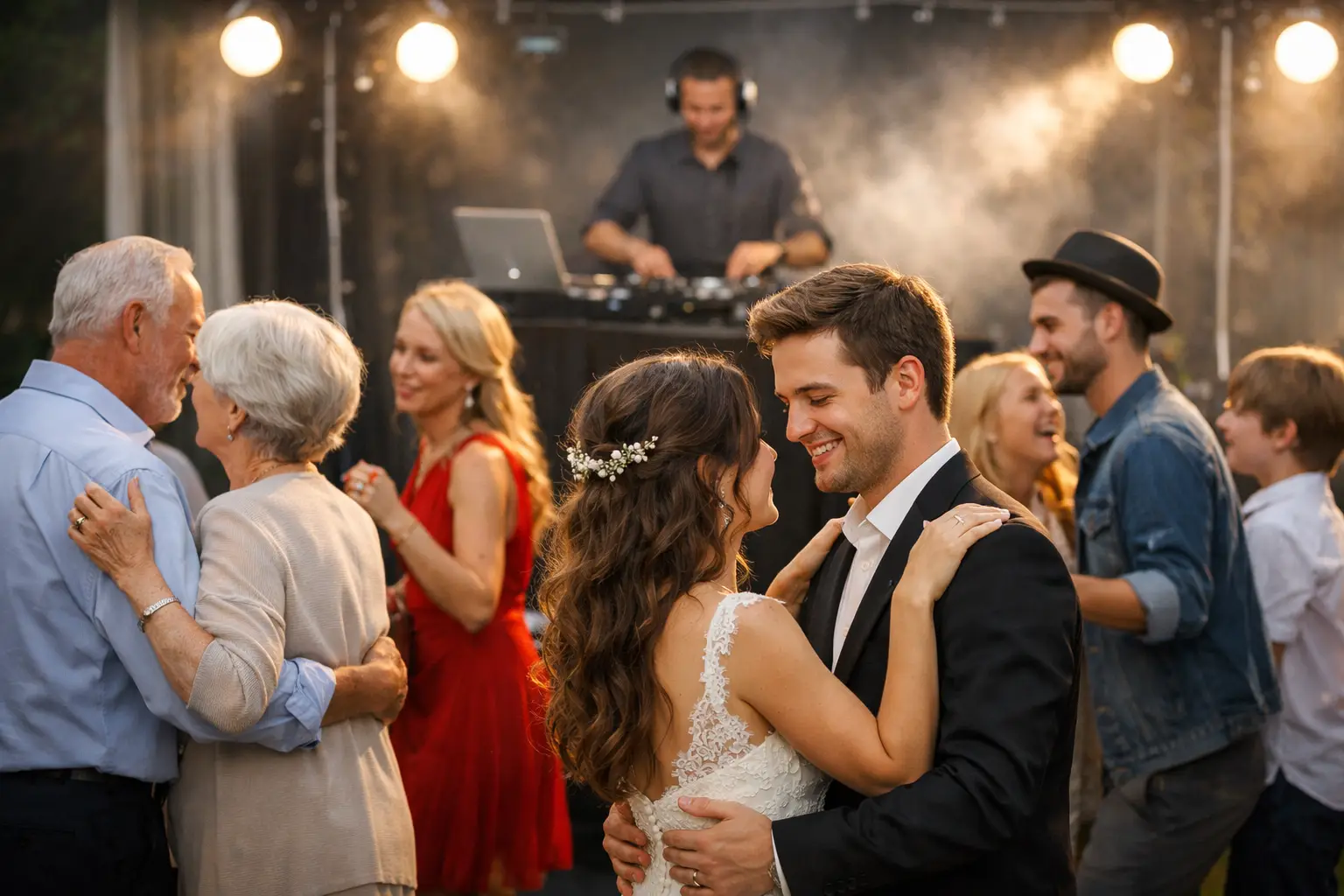
Why music for a multi-generational wedding is more than just a playlist
Many couples start with a simple idea: "We'll just pick a few songs for each age group, and that will be enough." In practice, this rarely works. A wedding isn't a radio mix or a request box from which titles are randomly drawn. The atmosphere isn't created solely by good songs, but by timing, transitions, and the right feel for the room.
The 70s hit that works wonderfully at a champagne reception can completely kill the energy at 11 PM. A current club track might immediately grab the younger guests but send the rest of the party to their seats if it comes on too early. This is exactly where a random music collection separates itself from a party that feels right all evening.
With a true generational mix, you don't need musical equality across age groups. You need dramaturgy. First, everyone arrives together, then you carefully build the tempo, later set clear highlights, and in between, you always build bridges. Anyone who doesn't think about this will quickly have several small parties in the same room – but not a shared wedding.
The biggest misconception about the generational mix
The biggest misconception is that you have to cater to everyone simultaneously and permanently. That sounds fair, but it's often the worst solution musically. If three songs for the older generation are immediately followed by three songs for the younger ones, and then the abrupt change comes again, the evening feels disjointed. The dance floor loses its flow.
It's better to think in phases. There are moments when a well-known disco classic works across generations. There are windows of opportunity for Schlager, oldies, '90s music, current hits, or party anthems. And there are those strong bridge songs that almost everyone knows – these are precisely the ones that often make the difference at weddings.
Experience shows: People don't just celebrate what they hear themselves. They also celebrate songs that they recognize together. That's the lever. Not every track has to be everyone's favorite song. But many tracks should have enough recognition, emotion, and rhythm so that no one feels excluded.
How to plan music for a multi-generational wedding reception
The best start isn't asking about individual songs, but about the guests. How old is your group approximately? Are there strong musical camps? Is the celebration more elegant or wild? Are there family branches that strongly associate certain music with celebrations? Such information is more valuable than a list of 150 requested songs.
In planning, I prefer to work with musical priorities rather than wish lists. This means: which genres must be included, which are allowed, and which absolutely not. In addition, there are a few personal key songs – for the opening dance, special family moments, or the late escalation phase. This creates a framework that is individual but still allows room for the dynamics of the evening.
It's also important to clearly distinguish between background music and dance music. During dinner, receptions, or quiet program segments, the music should be unifying and stylish, without drawing attention. Different rules apply on the dance floor. There, songs not only have to be liked, but they have to work.
What I really need to know about couples
If you're planning an evening with mixed generations, five things will help you most: how you want to celebrate yourselves, how your guests generally think, what the no-gos are, which songs are emotionally important, and how open you are to spontaneous adjustments. It's precisely this openness that's often worth its weight in gold.
Because no wedding goes exactly as planned. Sometimes the parents dance earlier than expected, sometimes the friends need their moment after midnight. Anyone who stubbornly sticks to a list misses out on potential. Those who can read the evening keep the energy flowing.
Which music genres tend to work well in a mix of generations
There isn't a rigid recipe for success, but there are patterns that work surprisingly often at weddings. Soul and disco classics, well-known 80s hits, selected 90s tunes, German party hits sprinkled in with good judgment, singable pop anthems, and danceable chart-toppers can be a very powerful combination. It's not just the selection that's crucial, but the order.
Oldies work particularly well when they have energy and are immediately recognizable. With Schlager, it strongly depends on the audience, timing, and dosage. Some crowds love it, others tolerate two songs and are then ready for something else. Ballermann songs can also be a highlight – or a complete break. That doesn't depend on trends, but on the people in the room.
Current charts alone rarely carry a mix of generations. Common memories are often missing for that. Conversely, an evening that solely wallows in nostalgia can quickly become tiresome for younger guests. The art lies in the interplay: offering the familiar without seeming old. Bringing in the new without losing the community.
Bridge songs are often more important than favorite songs.
A bridge song is a track that multiple generations can immediately connect with. Not always because it perfectly suits everyone's musical taste, but because it's familiar, catchy, and reliably creates a good atmosphere. It's precisely these types of songs that keep groups together when the dance floor might otherwise split up.
This is why weddings are so special musically. It's not about scene credentials or the coolest selection. It's about connection. When the right song plays at the right moment, people dance together who would rarely listen to the same music in everyday life. This isn't a coincidence, but skillful preparation.
Typical mistakes that clear the dance floor
The first mistake is playing full-throttle music too early. If the music is just bangers right after the meal, many guests feel overwhelmed. The second mistake is too harsh a style clash. From Fox to Black, from Schlager to EDM, from dinner jazz to party music without a transition – this can work, but only with a good sense of feel.
The third mistake is overloading with requests. Of course, guests are allowed to make requests. But a wedding is not a democratic jukebox night. If every single request is played immediately, the celebration loses its flow. Good music selection also means filtering kindly.
And then there's the classic: couples only plan for themselves. That's understandable, it is your wedding after all. But if your favorite music is very specific, it should be incorporated deliberately and not dominate the entire evening. A good wedding celebration should reflect your personality without alienating your guests.
How a DJ Makes a Difference
For wedding music that appeals to a mix of generations, the real skill isn't just playing songs, but managing the energy. An experienced DJ observes who is on the dance floor, who is still hesitant, when a song should be extended, and when the next impulse needs to come. This can't be fully accomplished with a pre-built playlist.
Tact is crucial, especially in mixed groups. Sometimes a familiar chorus is enough to start a new wave. Sometimes you have to consciously take your foot off the gas a bit so that the next section hits even harder afterward. You rarely hear these nuances in preparation, but you feel them immediately at the party.
This is precisely why personal consultation and experience are so important. When I, as a DJ, know what is emotionally important to you and can simultaneously read the room, it doesn't result in just any party. Instead, your wedding becomes an evening with your own personal touch, heart, and genuine movement on the dance floor.
How to bring your guests along without becoming generic
The best way is clarity instead of hoarding. Set musical guardrails. Say what's important to you, where your boundaries lie, and what mood you desire in the different phases. Then trust that a good evening can unfold.
A mix of generations doesn't need a musical compromise that only half-hits everywhere. It needs a common thread., good transitions and the feel for when shared hits are stronger than individual preferences. When that clicks, those are the moments that stay with you years later: full dance floor, laughing faces, multiple generations united in one song.
As you plan your wedding, don't think about music in terms of lists, but in terms of people, moments, and mood. That's where the difference between pleasant background noise and a celebration that truly stays in the heart begins.
Book DJ GerreG now & secure your desired date in good time
Are you planning your wedding or another party?Then secure your DJ early! I'll be happy to accompany you from the planning stages to the last encore in the early morning hours. I'm really looking forward to your message! 🎶

🎧 More from DJ GerreG
👉 Website:
https://djgerreg.de
🎧 Spotify:
https://djgerreg.de/spotify
📸 Instagram:
https://instagram.com/djgerreg
Play button YouTube:
https://www.youtube.com/@DJGerreG
🛒 Buy songs (before release):
https://gmusiqrecords.de/shop