When the entertainment at a party isn't well-coordinated, you notice it immediately. The music starts too late, program items drag on, speeches disrupt the mood at the wrong moment, and in the end, even a beautifully planned event feels chaotic. That's exactly why you should your Coordinate Event Entertainment Effectively – not only on the day of the event, but already during the planning.
For many years, I've experienced that a good atmosphere is rarely a coincidence. Full dance floors, relaxed hosts, and enthusiastic guests emerge when music, technology, flow, and communication come together. It's not just about booking a DJ, a band, or a show act. It's about everything working at the right time, in the right place, and feeling good for your guests.
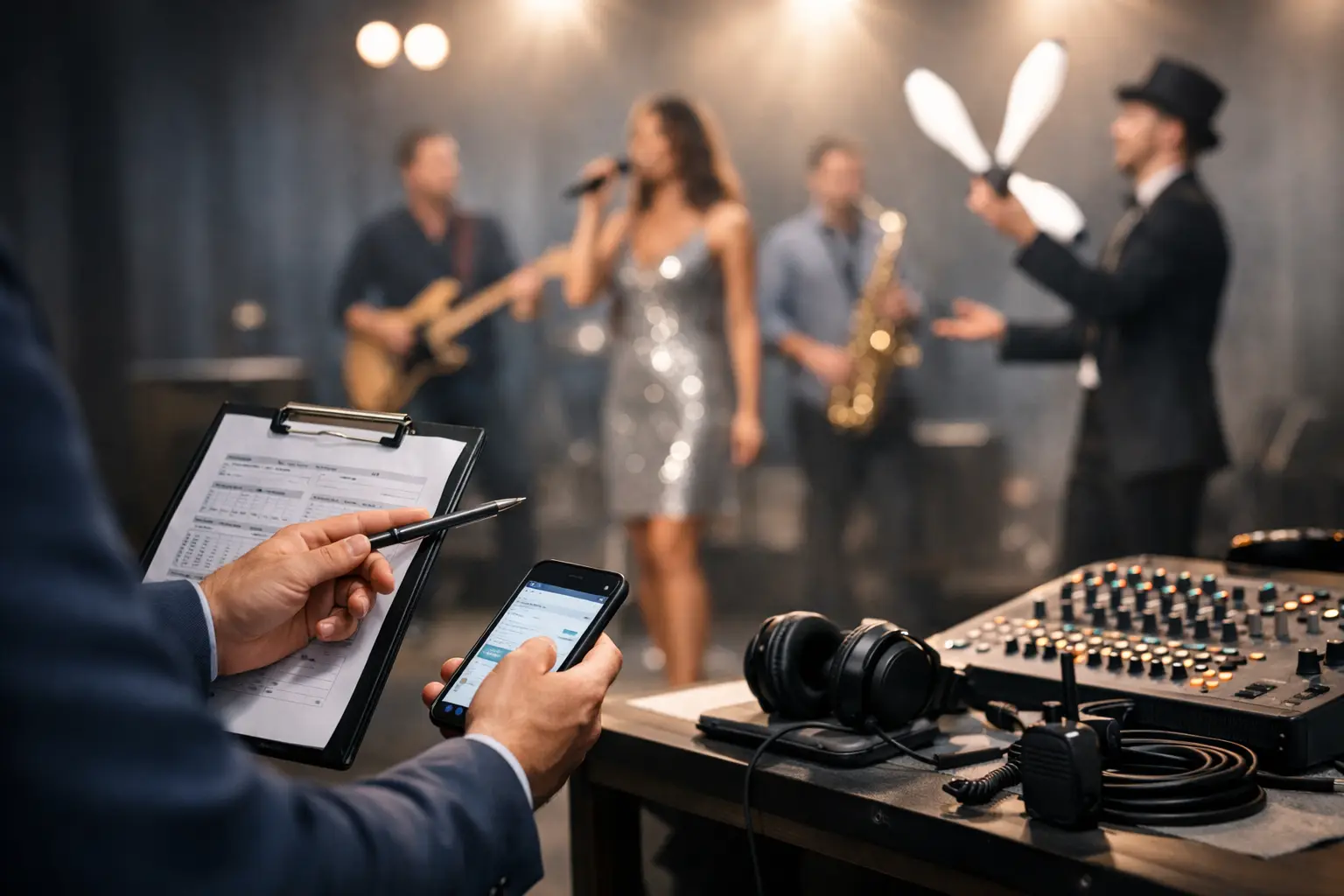
Why great entertainment is more than just a booked act
Many organizers first think about the question: Who should perform or DJ? The better question is: What should happen at which point of the evening to make the mood grow instead of falter? This is exactly where a nice party separates from an evening that will be talked about for a long time.
Entertainment is not an isolated program item. It influences the entire rhythm of your event. A champagne reception requires a different energy than dinner. A company party often demands more tact in moderation than a private birthday party. And at a wedding, the interplay of emotional moments, speeches, the first dance, and the party is particularly sensitive.
Those who recognize this early on will save themselves trouble later. Because most problems don't arise from bad artists, but from a lack of coordination. When no one clearly defines when to set up, who gives cues, how long program items will last, or when the dance floor will open, friction occurs. Everyone feels this friction in the end.
Coordinating Event Entertainment Effectively – with a Clear Schedule
The most important step is a realistic schedule. Not perfect on paper, but resilient in practice. A good process has structure, but leaves room for spontaneous moments. If every minute is planned, the event can get out of sync at the first minor delay. If nothing is planned at all, there's a lack of direction.
I recommend establishing the fixed points first. These include guest arrival, meals, speeches, honors, entertainment acts, the first dance, or even a midnight snack. Then, consider the role of the entertainment between these points. Should the music merely accompany, create atmosphere, bridge transitions, or actively get the audience onto the dance floor? The clearer you answer this, the easier the coordination will be.
It's also important to establish responsibilities. Who decides in the evening whether a program item will be postponed? Who informs the DJ or the artists? Who keeps track when the kitchen, service, photographer, and entertainment are all dependent on each other at the same time? Especially for larger celebrations, you need a person who can consolidate this information. Otherwise, everyone talks to everyone else – and no one talks to the person who has to deliver in the next moment.
The Most Common Mistakes in Event Planning
A classic mistake is misjudging time. A speech rarely lasts only five minutes if three people spontaneously want to say something. A group photo can quickly postpone the start of dinner. And if dessert comes later than planned, the party can't start on time either. Good coordination therefore always means thinking about buffers.
The second mistake is a disruption in the atmosphere. If there's a sudden hectic rearrangement during an emotional wedding dance, or if party volume starts abruptly after a stylish dinner without transition, the evening won't feel cohesive. Guests can sense the mood very accurately. They immediately notice whether an event is guided or is being improvised piece by piece.
The third error lies in a lack of technical coordination. A speaker needs a wireless microphoneShould a video play with sound? Is there outdoor and indoor space with different sound systems? Will Lighting moods requested, who help develop the evening? Such questions may seem minor, but they often decide whether a program item comes across as professional or gets off to a bumpy start.
This way, you'll coordinate music, hosting, and timing cleanly.
Music at an event is more than just entertainment. It controls energy, tempo, and attention. That's why it should never be planned separately from the schedule. During the reception, it can carry conversations but shouldn't overwhelm them. During dinner, it creates atmosphere without being intrusive. Later, it needs to strike the right moment when casual conversation turns into a real celebration.
When moderation comes into play, voting becomes even more important. Announcements should be brief, clear, and well-timed. Nothing slows down an evening more than too many interruptions or poorly timed transitions. Good moderation guides without being obtrusive. It provides direction and holds the evening together.
When it comes to timing, the best moment for the party isn't automatically the time that was originally scheduled. Sometimes guests are ready after the main course. Sometimes, after several speeches, a relaxed musical transition is needed. This intuition makes a real difference. Experience helps enormously with this, as it allows you to read the mood and react flexibly.
Successfully Coordinating Event Entertainment for Weddings, Corporate Events, and Family Celebrations
Not every event needs the same dramatization. The emotional curve is particularly strong at weddings. Here, music and the sequence of events are deeply intertwined. From the reception to the first dance to a full dance floor, the evening should develop naturally. Too many program items often fragment the celebration. Too little structure, on the other hand, can make important heartfelt moments fade.
At company parties The picture here is a bit different. Very different age groups, musical tastes, and expectations often meet here. Some want to network, others want to party wildly. Therefore, it is especially important to clearly define the occasion. Is it about casual get-togethers, a Christmas party with a show character, or a company party where dancing is really supposed to happen later? The more precise the goal, the more appropriate the entertainment planning.
At family gatherings What counts most is the right feel for the people in the room. Several generations celebrate together, program items arise spontaneously, and often no one is meant to feel excluded. This is precisely why the music selection is so crucial here. It must connect rather than divide. An experienced DJ can handle a lot here if wishes, no-gos, and target groups were discussed openly in advance.
What you should tell your DJ or entertainer early on
The better the briefing, the more certain the evening. This includes not only the date, location, and time, but also the goal of the celebration. Should the entertainment provide elegant accompaniment, touch on an emotional level, or fill the dance floor without compromise? Are there favorite songs, established traditions, planned surprises, or sensitive points that should best be avoided?
The organizational framework is also important. When is admission? When does the meal start? Are there contact persons on site? How are setup and dismantling handled? What technical equipment is available, what needs to be brought along, and are there any special features of the location? If this information only surfaces on the day of the event, it costs unnecessary energy.
I consider personal consultation to be one of the most important success factors there is. Especially at celebrations with heart, it's not just about technology and song titles, but about understanding people. Those who understand the hosts can generate mood, security, and the right tension much more effectively.
Good coordination also means staying flexible
No matter how carefully you plan – an event remains alive. Guests arrive late, speeches become more emotional than expected, the weather changes, or a program item is spontaneously dropped. This isn't a sign of poor planning, but part of real events. What's crucial is how well you and your entertainment team can react to it.
This is why the flow should never be rigid. It needs clear guardrails, but also freedom to make decisions. If the dance floor is currently on fire, it's not the perfect moment for a long interruption. If the guests' attention is waning, a well-timed musical change can achieve more than any announcement. This intuition doesn't come from theory, but from experience with real people.
If you plan your event with heart, you shouldn't just think about music for entertainment, but about impact. Good coordination ensures that your evening doesn't just run smoothly, but also connects – emotionally, organizationally, and atmospherically. That's precisely when a celebration becomes an experience that you and your guests will truly cherish.
Book DJ GerreG now & secure your desired date in good time
Are you planning your wedding or another party?Then secure your DJ early! I'll be happy to accompany you from the planning stages to the last encore in the early morning hours. I'm really looking forward to your message! 🎶

🎧 More from DJ GerreG
👉 Website:
https://djgerreg.de
🎧 Spotify:
https://djgerreg.de/spotify
📸 Instagram:
https://instagram.com/djgerreg
Play button YouTube:
https://www.youtube.com/@DJGerreG
🛒 Buy songs (before release):
https://gmusiqrecords.de/shop